You've finally got the baby sleeping through the night. And then you walk into the nursery at 2 a.m. for a feed and stub your toe on the rocking chair, flip on the ceiling light because you can't see the diaper, and your baby goes from drowsy to fully awake in about four seconds. Sound familiar?
That's the moment most parents realize a calming nursery isn't about beige paint. It's about what happens at night, in the dark, when you're half-awake and your baby's nervous system is deciding whether to stay asleep or start the day at 2:47 a.m. If you're searching for nursery design ideas for a calming space, the real answers are less about Pinterest boards and more about light, sound, air, and how you move through the room at your worst hour.
I'll be honest: I got the aesthetics right on my first nursery and the function completely wrong. The palette was perfect. The 3 a.m. experience was a disaster. Here's what I learned, plus what actually holds up in 2026.
Key Takeaways
- A calming nursery is built on light, sound, air, and movement — aesthetics come after these four.
- Warm light under 2700K, on a dimmer, with zero overhead lighting for night feeds, does more for sleep than any color palette.
- Layered textures and matte finishes keep a neutral palette from feeling sterile — this is the trend holding steady into 2026.
- Parent ergonomics matter: changing table height, chair lumbar support, and clear floor paths prevent midnight accidents.
- Low-VOC paint, washable textiles, and cleanable surfaces are non-negotiable once a crawling baby arrives.
What actually makes a nursery calm (and it's not the paint color)
Here's a number that reframes everything: your baby's sleep drive is largely governed by melatonin, and melatonin production is suppressed by blue-rich light. Ceiling LEDs are loaded with it. So when you flip that switch for a 3 a.m. diaper change, you're not just waking your baby up — you're actively telling their brain it's daytime.
This is the piece nearly every nursery design article skips. They'll spend 800 words on beige versus greige and four words on lighting. The lighting is the whole game.
Lighting: the single highest-leverage decision
What I now recommend to every parent who asks:
- Get every bulb in the room below 2700K — warm amber. Ideally the entire fixture runs on a dimmer and never goes above 20% brightness after sunset.
- Install a red or amber night light near the changing table. Red wavelengths barely touch melatonin.
- Kill the overhead light for night wake-ups. Full stop. It's the fastest way to sabotage sleep.
- Add a small clip light to the glider for reading — one that won't spill onto your baby's face.
I replaced the ceiling bulb in my own nursery after two months of terrible nights. Nights got noticeably easier within a week — not magic, just biology working in my favor.
Sound and acoustics
Sound gets ignored even more than lighting. But a nursery echoes. Bare walls and hardwood floors turn a tiny whimper into a room-filling event that wakes the whole house.
Sound-absorbing additions that pull double duty as design:
- Heavy, lined curtains — these also block street light.
- A plush rug over hard flooring.
- Soft wall hangings or a fabric canopy.
- Upholstered furniture rather than all-wood pieces.
If you use a white noise machine, keep the volume moderate — a comfortable conversational level rather than loud — and place it several feet from the crib, not on the rail next to your baby's head. That's a detail that rarely makes it into nursery guides, but it matters.
What are the trends in nursery design for 2026?
Neutrals aren't going anywhere. But the interesting shift in 2026 is that "calm" has moved from a color decision to a sensory one. Parents are asking about light temperature and air quality the way they used to ask about accent walls.
The trends actually holding:
- Warm neutrals over cool grays — bone, oatmeal, warm white, soft terracotta accents.
- Matte finishes and visible texture — bouclé, linen, rattan, hand-thrown ceramics. Texture is doing the work that bold color used to do.
- Multifunctional parent zones — the glider corner becomes a reading nook, the changing table surface doubles as storage. Rooms do more with less.
- Adaptable design — pieces that grow with the child, so the room doesn't need a full overhaul at age three.
- Low-VOC everything — paint, sealants, and furniture finishes chosen for air quality, not just looks.
The beige backlash is real, though. Some parents are pushing back against the monochrome nursery and adding one confident accent — a sage wall, a patterned rug, a single warm mustard throw. My opinion: pick one accent and commit. Three accents is chaos. One is personality.
What are some creative ideas for designing a nursery room?
Good nursery creativity isn't about novelty for its own sake. It's about solving a real problem beautifully. Here are ideas that earn their place.
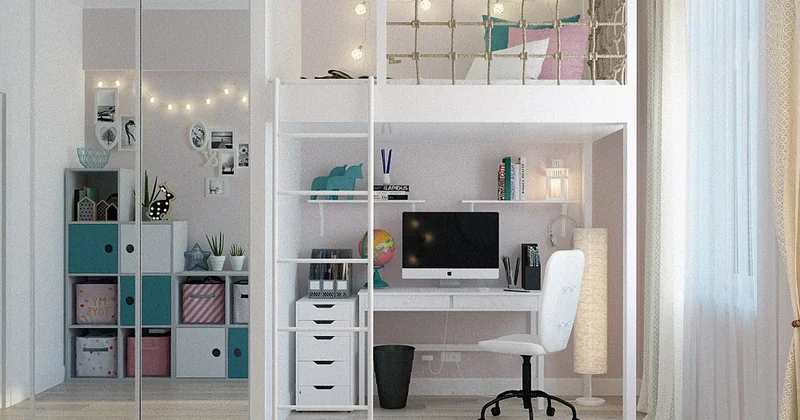
The diaper station that saves your back
Most changing tables are too low. You'll be bending hundreds of times a week. Set the changing surface so that when you stand, your hands land comfortably at hip-to-waist height — no hunching. Some parents mount a wall-hinged changing top at their own ergonomic height. It sounds fussy. Your lower back will thank you.
A reading nook that actually holds up
The glider is where you'll spend more time than you expect. Test it for lumbar support and armrest height, not just looks. Add a small side table within reach for water, a phone, and a burp cloth — reaching across the room in the dark is how you knock over a lamp.
Texture over color
A neutral room stays interesting if you layer at least four textures: a nubby rug, a linen curtain, a woven basket, a knit blanket. That's a design principle that costs nothing extra and ages beautifully — when the palette feels stale, swap one textile instead of repainting.
One piece of wall art with a story
Personal touches matter more than gallery walls. A framed photo, a hand-painted sign, a quilt from a grandparent. In 2026 there's a real pull toward fewer, more meaningful objects rather than a wall of identical prints.
Nursery design ideas for a calming space: does it differ for a boy or a girl?
Short answer: not as much as the marketing suggests. The sensory principles — warm light, soft sound, layered texture, clean air — are identical regardless of gender.
What changes is the accent. A calming girl's nursery might lean toward dusty rose, blush, or warm lavender accents on the same neutral base. A boy's nursery might use sage, slate blue, or earthy ochre. Both work. The mistake is treating gender as a license to abandon the calming principles — a bright primary-color nursery is still bright primary.
Honest take: I've seen plenty of nurseries where the "boy" room got a dark saturated navy wall and the parents later regretted it because it made the small space feel heavy. The wall color should serve the room's function first.
What are some ideas for a nursery room for childcare?
If your nursery doubles as a space for a nanny, a family member, or a home childcare setup, the design brief changes. Now you're designing for adults who aren't you.

Priorities shift toward:
- Clear, labeled storage. Diapers, wipes, spare clothes, and bottles need obvious homes so anyone can find them without asking.
- A visible routine board. Nap times, feed amounts, and any allergies posted where a caregiver sees them.
- Easy-clean surfaces. Wipeable changing pads, washable covers, flooring that handles a spill at speed.
- Safety-first layout. No cords near the crib, furniture anchored to the wall, safe sleep space kept completely clear.
- A quiet corner for the caregiver — a chair and a place to set a cup down.
The childcare version of "calm" is predictability. When the room is self-explanatory, everyone relaxes — including the baby picking up on the adult's stress.
The piece almost nobody talks about: air and materials
Here's my biggest regret from my first nursery: I focused on how it looked and not at all on what off-gassed into it. New furniture, new paint, new rugs — all of it releases volatile organic compounds, and a baby's developing lungs are more vulnerable than yours.
What to do:
Choose low-VOC or zero-VOC paint. Air the room out thoroughly before your baby sleeps in it — days, not hours. Prefer furniture with solid wood and water-based finishes over particleboard with heavy coatings. Wash new textiles before use. And once your baby becomes a crawler, favor washable, cleanable surfaces over precious fabrics.
None of this photographs well. All of it matters more than the accent pillow.
A quick way to weigh your options
When you're choosing between approaches for a calming nursery, this comparison cuts through the noise.

| Design choice | Effect on calm | Effort to change later |
|---|---|---|
| Warm, dimmable lighting | Very high — direct effect on sleep | Low |
| Neutral, textured palette | Moderate — visual softness | Low (swap textiles) |
| Acoustic soft goods (rug, curtains) | High — reduces echo and wakings | Moderate |
| Low-VOC paint and materials | High — long-term health | High (repaint, replace) |
| Thematic wall decor | Low — mostly for you | Low |
Read that table honestly: the things at the top cost little and do the most. The things at the bottom are nice and optional. Spend your budget from the top down.
Design the room you'll actually live in at 3 a.m.
Every nursery decision comes down to one test. Picture yourself at 3 a.m., half-asleep, baby in one arm, trying to do something one-handed in the dark. Does your design help you or fight you?
The warm dimmer helps. The plush rug that muffles the floor helps. The clear path to the rocking chair helps. The perfectly styled shelf of trailing plants that you now have to move every feed? It fights you.
Calm, in the end, isn't a color you pick. It's a room that stops demanding things from you when you have nothing left to give. Build for the worst hour, and every other hour takes care of itself.