The first thing guests see in my bathroom is a wall of open shelves holding towels, a jar of bath salts, and a stack of folded washcloths. Nothing is hidden. And yet people always ask the same question: "Where do you keep all the actual stuff?"
The answer is that stylish bathroom storage solutions aren't about owning less. They're about deciding what deserves to be seen and designing the rest to disappear. That distinction, visible versus hidden, is the lens every good decision runs through.
I learned this the hard way. When I moved into my current flat, the bathroom was 2.4 square metres with no window and one electrical socket. I installed a glass shelf above the sink that looked beautiful in photos and became a chaos magnet within a week. Everything I owned ended up on it because I had no plan for the hidden category.
Key Takeaways
- Split your storage into visible (objects that earn their display) and hidden (everything else), then design each separately.
- Small bathrooms fail not from lack of space but from lack of vertical planning.
- Humidity destroys the wrong materials faster than any design mistake.
- In a rental, adhesive and freestanding solutions can carry 100% of the load.
- Aligning shelf heights and keeping one material palette does more for "classy" than any single product.
The principle behind bathroom storage solutions that look stylish
Here's the thing: most storage advice treats "storage" and "style" as separate problems you solve in sequence. Store everything first, then decorate around it. That's backwards.
What actually makes bathroom storage look designed is a clear ratio between what's shown and what's concealed. In my apartment, roughly 20% of objects are visible. The other 80% live behind doors or inside baskets. That proportion is what gives the room its calm, not the specific shelves I bought.
What earns a place on display
Rules I now apply to any open surface:
- Matching containers only — mismatched bottles kill the effect instantly.
- No more than five objects per shelf.
- One item that's purely decorative (a stone, a candle, a small vase).
- Towels folded to a consistent width, stacked no higher than three.
- Anything with a label in a language of cleaning products gets hidden.
Sound restrictive? It is. And that's why it works.
Making the hidden half count
The concealed side needs just as much planning, but nobody talks about it because you can't photograph it well. A vanity drawer with dividers, a narrow pull-out beside the basin, a tall slim cabinet recessed into a wall cavity: these are the pieces that let you keep the visible shelf empty enough to look intentional.
When I first started paying attention to this, I thought the goal was more storage. It isn't. The goal is the right amount of storage in the right places, so that the visible surfaces stay sparse.
Small bathroom storage solutions that look stylish: working within real constraints
A 2.4 square metre bathroom with no window changes the rules. You can't rely on light to flatter, you can't rely on ventilation to dry things out, and you can't rely on floor area for anything.
What surprised me is how much vertical space goes unused. In that first flat, the wall above the door was empty for two years before I noticed it. A shallow cabinet there held every cleaning product I owned and I never had to look at any of them again.
Vertical options that don't look cramped
- Over-door racks in a matching finish — cheap, rental-safe, invisible when the door is open.
- Recessed niches if you're renovating: 10 cm of depth is enough and they add zero visual clutter.
- Tall slim cabinets between 15 and 25 cm deep, floor to ceiling where possible.
- Wall-mounted ladder shelves — attractive, but only if you genuinely limit what goes on them.
- A floating shelf above the toilet, which I resisted for years because I assumed it would feel oppressive. It doesn't, if the shelf is shallow and the ceiling is high.
When you can't drill a single hole
Renters get told to "just use adhesive hooks" as if that solves everything. It doesn't — adhesive fails on textured or damp surfaces, and most bathroom walls are one or the other.
What actually works: freestanding units that lean, tension poles between floor and ceiling, and over-door brackets. I used a tension-pole shelving unit in a rented flat for fourteen months and it held shampoo, conditioner, and a hairdryer without a single mark on the walls. The catch? You have to check the ceiling height before you buy, and most listings bury that information.
The material question almost nobody addresses
Humidity is the quiet destroyer. I once bought a set of bamboo storage boxes for a windowless bathroom. Beautiful for about five months. Then the bases started to darken, and by month eight the corners had gone soft.
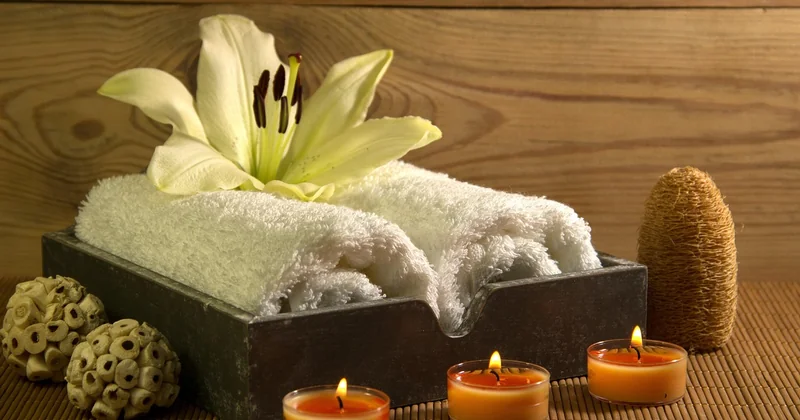
Materials that hold up in a wet room:
- Powder-coated metal — my default now, and it doesn't care about steam.
- Glazed ceramic and stoneware — heavy, but permanent.
- Solid, sealed wood — works if it's genuinely sealed and the room ventilates.
- Acrylic and glass — fine, though glass shows every water mark.
- Untreated bamboo or MDF — avoid, unless you enjoy replacing things.
One more point, and it's the one I wish someone had told me: ventilation behind and above storage matters as much as the material itself. A sealed cabinet pushed tight against a damp wall will grow problems regardless of what it's made of.
Comparing the main storage approaches
Here's how the common options stack up on the things that actually decide the outcome.
| Approach | Visual impact | Typical cost | Rental-friendly | Best for |
|---|---|---|---|---|
| Open shelves | High — everything is on show | Low to moderate | Yes, with care | Rooms with few objects and good light |
| Recessed niches | Very high, fully integrated | High (needs building work) | No | Renovations and showers |
| Freestanding cabinets | Moderate | Moderate | Yes | Any room, any wall |
| Vanity with drawers | Low — hides almost everything | Moderate to high | Sometimes | The 80% hidden category |
| Baskets and boxes | Depends entirely on the container | Low | Yes | Corralling the chaos on existing shelves |
| Tension-pole systems | Moderate | Low | Yes | Corners and tight floor space |
My own ranking, if you forced me to pick two: a vanity with proper drawer dividers, and one shallow wall cabinet. Everything else is decoration. I'll defend that position.
Questions I get asked most
What are some stylish ways to add storage in a bathroom?
The most reliable approaches are recessed niches, a vanity with internal drawers, shallow wall-mounted cabinets, and matching baskets on open shelving. Each one either hides clutter or gives it a consistent visual container, which is what separates a designed room from a cluttered one.
What are some stylish ways to store bathroom items?
Group items by frequency of use rather than by type. Daily items go in the most accessible spot, in a matching container. Refills and rarely used products go high or deep. Decanting shampoo and soap into uniform bottles is the single cheapest upgrade — it costs very little and transforms the look of any shelf.
How to make your bathroom look classy?
Classy comes from consistency, not expense. Pick one metal finish and one container material, align your shelf heights, keep surfaces under-filled, and hide anything with a brand label. A cheap room executed consistently reads more refined than an expensive one with mismatched fittings.
What are the bathroom trends for 2026?
The direction I'm seeing is toward integrated, uncluttered storage: recessed niches instead of protruding shelves, warm neutral palettes over stark white, and furniture-style vanities that look like real pieces of furniture rather than built-in units. Textured stone and fluted surfaces are also showing up widely. The thread running through all of it is concealment — the trend is less stuff on display, more designed into the walls.
Where to stop
You can spend a fortune on bathroom storage. You can also spend almost nothing and get a better result.
The number that matters isn't your budget. It's the ratio: how much of your bathroom's contents are visible versus hidden. Get that balance right and the room starts looking deliberate. Get it wrong and no amount of matching stoneware will save you. The shelf above my sink is still mostly empty, two years on. That emptiness is the whole design.