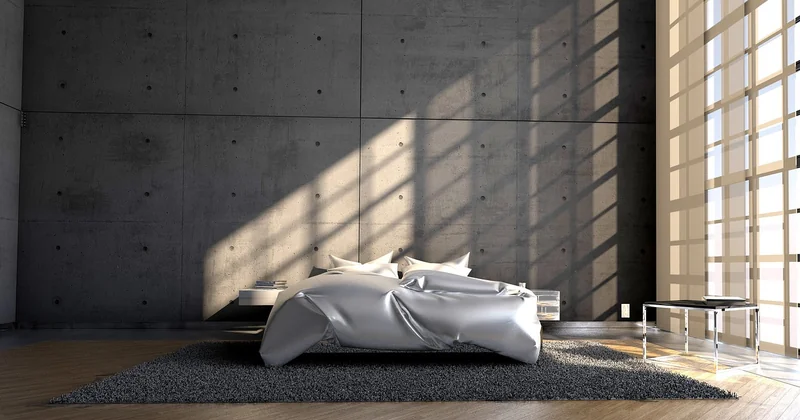
White walls. One chair. A single art book on a concrete floor. For years, that was the picture of good taste. And honestly? Half the people who built those rooms couldn't sit in them for an hour without feeling like they were waiting for a doctor's appointment.
Walk through a furniture showroom this spring and something has shifted. The white is now off-white. The chrome is brushed brass. The concrete has been swapped for honed limestone, and the sole chair has a linen cushion on it. Call it warm minimalism—and it is quietly pushing stark minimalism out the door. The clean lines survive. The coldness doesn't.
I noticed it first on my own projects. A client in Bordeaux asked me to redo her living room last year, and when I handed her the mood board—all pale oak, oatmeal bouclé, chalky plaster—she exhaled and said, "Finally, something I could actually live in." That sentence stuck with me. She wasn't rejecting minimalism. She was rejecting the showroom feeling that came bundled with it.
Key takeaways
- Warm minimalism keeps the discipline of minimalism and changes the materials: less white, more bone, clay, pale oak, linen and honed stone.
- Stark minimalism failed on comfort, not on aesthetics. People didn't want more objects—they wanted softer surfaces.
- The shift is measurable in buyer behavior: earthy, tactile finishes are outselling glossy, cool ones in the same price brackets.
- Get it wrong and you land in "bland maximalism," where every neutral looks the same and the room feels like a hotel lobby.
- You can test the trend in one room for less than the price of a single designer sofa, and you'll know within a week if it fits.
Why warm minimalism is replacing stark minimalism
Here's the short version: stark minimalism optimized for photographs. Warm minimalism optimizes for Tuesday evening at 8 p.m., when you're tired, the light is low, and you want to put your feet on something that doesn't feel like a museum floor.
The stripped-back aesthetic that dominated interiors from the late 1990s onward leaned on a narrow kit of materials—white lacquer, polished chrome, cold gray engineered stone, glass, a lot of gloss. Those surfaces reflect light hard and photograph beautifully under a camera flash. In a real room, under a real gray sky, they read as clinical.
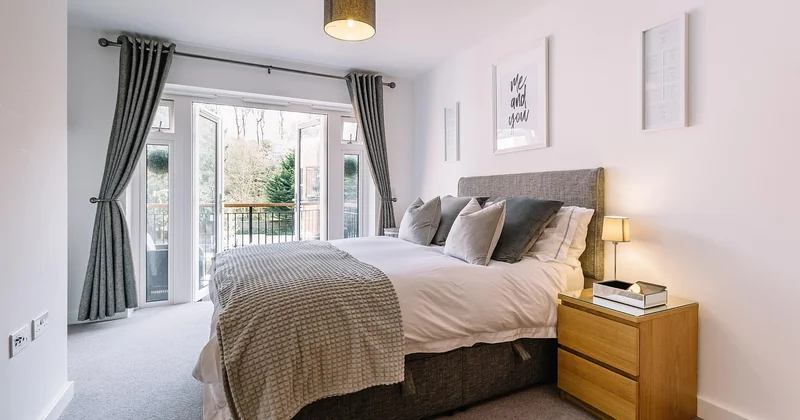
Warm minimalism takes the same restraint and swaps the ingredients. You keep the empty surfaces and the lack of clutter, but the palette moves toward bone, chalk, clay, warm gray, pale oak, walnut, chocolate brown. Steel becomes brushed brass or unlacquered bronze. Polished stone becomes honed limestone or travertine. Glass tabletops become oiled wood. Textiles—linen, wool, cotton canvas—come back in, but only as few pieces as possible.
The same room, two different temperatures
I'll give you a concrete comparison, because the words "warm" and "stark" are too vague to be useful on their own. Take a 24 m² living room, north-facing, one window. Here's how the two approaches play out in practice:
| Element | Stark minimalism | Warm minimalism |
|---|---|---|
| Wall finish | Pure white, matte or eggshell | Bone, chalk, or limewash with visible texture |
| Floor | Polished concrete or pale gray tile | Wide-plank pale oak, oiled |
| Main surface | White or gray quartz, high gloss | Honed limestone, travertine, or butcher-block wood |
| Metal accents | Chrome, stainless steel | Brushed brass, bronze, blackened steel |
| Soft furnishings | Few or none | One wool rug, one linen sofa cover, one throw |
| Lighting | Recessed spots, cool white bulbs | Warm-white bulbs (2700 K), paper or linen shades |
Notice that the room still has almost nothing in it. That's the whole point. Warm minimalism isn't an excuse to add stuff—it's a change of temperature, not a change of discipline. Which is why I get faintly annoyed when people describe it as "minimalism for people who can't commit." No. It's minimalism for people who actually live in their homes.
Why the cold version cracked
The cracks were there for years before anyone named them. Think about what stark minimalism asked of you: no rugs because they trap dust, no cushions because they break the line, no clutter because clutter ruins the photograph. Every practical object became a betrayal of the aesthetic. So people lived around their own rooms instead of in them.
The failure wasn't philosophical. It was physiological. Cool surfaces feel physically colder. Hard floors amplify sound. Glossy finishes show every fingerprint, so you clean more. I remember visiting a client's apartment two weeks after we finished it—she'd draped a wool blanket over the one designer chair and hidden the coffee-table book in a drawer. She apologized for it. She shouldn't have.
The room was working against her body. That's the diagnostic. Once you see it, you can't unsee it in a thousand interiors from the 2010s.
Are we leaving the minimalist era?
No—and this is where a lot of trend pieces get it wrong. What's ending isn't minimalism. It's the specific cold, hard-edged version of it that got confused with the whole idea.
Look at what's actually moving in the market. Across furniture retail, the biggest gains in the neutral palette are in earthy browns, clays, and warm off-whites, not stark whites. The brown family in particular has climbed from a niche choice to a top-selling color group in premium upholstery over the past few seasons. Pale oak has steadily eaten into the share of gray-washed timber. Those are not the numbers of a minimalist era ending—they're the numbers of a minimalist era relocating its center of gravity.
Meanwhile, the maximalist revival everyone keeps announcing is real but narrow. It's loud, it photographs well, and it mostly lives on social media. In actual homes, people still want empty surfaces. They just want those surfaces to feel like they belong to a person.
What actually dies in 2026
Let me be blunt about the casualties. Three things are on their way out:
- The all-white gallery room. Beautiful in a magazine, hostile at 7 a.m. in February.
- Cool gray everywhere. Gray engineered stone, gray walls, gray sofas, gray floors—the whole monochrome has started to read as "rental apartment."
- Gloss and chrome as default choices. Still correct in a bathroom or a kitchen splashback, wrong almost everywhere else.
And one thing survives almost untouched: the empty surface. Nobody is going back to shelves of decorative objects. Warm minimalism doesn't want more stuff. It wants the stuff that's left to be made of better materials.
What is the 3-3-3 rule in minimalism?
The 3-3-3 rule is a decluttering guideline often used in minimalist wardrobes and packing: three tops, three bottoms, three pairs of shoes as a starting capsule, to prove to yourself how little you actually need. In some versions it's applied to travel—three outfits for three days—or to a single drawer, where you keep three of each category and let the rest go.
I have to be honest here, because this rule gets oversold. As a permanent system, 3-3-3 is too rigid for most people's real lives. As a diagnostic, it's brilliant. Try it on one shelf or one weekend bag and you'll learn something uncomfortable: you probably wear about 20% of what you own.
How the rule meets warm minimalism
Where 3-3-3 does translate well is into materials. Instead of counting items, count finishes. My working rule for a warm minimalist room is to limit the palette to three materials and three tones—say pale oak, honed limestone, and linen; off-white, clay, and deep brown. Anything you add beyond that starts to fight the room.
That said, I've watched this rule backfire. When the tones are too close together—three shades of beige within a hair of each other—the room stops reading as intentional and starts reading as unfinished. You need contrast somewhere, or the whole thing goes flat.
Is Gen Z minimalist or maximalist?
Both, and the split is generational in a way that's easy to misread. Younger renters lean maximalist in the spaces they can control cheaply—posters, textiles, collected objects, visible personality—because they're usually in shared or short-term housing where they can't change the walls or the floor.
The moment that same group buys or rents a place they intend to keep, the aesthetic flips hard. What they want isn't clutter. It's calm with texture: warm plaster walls, a big wool rug, a chunky knit throw, wood that isn't painted. I've seen this pattern repeat in client conversations so often that I've stopped being surprised by it.
The counterintuitive part? This generation grew up with a camera in their pocket. They know how a room photographs. And warm minimalism photographs well—better than stark white, which blows out highlights and looks flat on a phone screen. The aesthetic that wins on social media in 2026 is the one that survives both the lens and the lived-in evening.
Is Mark Zuckerberg a minimalist?
Yes, in the visible, public-facing sense. His personal style is famously pared back—the gray T-shirt, the hoodie, the plain dark suits. And the interiors he's shown publicly, whether in his own home or in Meta's offices, tend toward stripped-back, neutral, low-clutter spaces.
But here's where I'd push back on the label. Wearing the same shirt every day is a form of minimalism, but it's not the same thing as designing a warm minimalist home. The aesthetic I've been describing is about materials and temperature inside a room. His public image is closer to the stark version—gray, dark, hard-edged, everything reduced to the fewest possible signals.
And that's actually a useful illustration of the whole shift. Stark minimalism works for a public persona because it removes friction from decision-making. Warm minimalism works for a home because it adds friction back in the right places. Two different jobs. One aesthetic doesn't have to do both.
What to take from the celebrity version
Not much, honestly, except the discipline. If you want a warm minimalist room, the useful habit isn't buying fewer shirts—it's removing one object every time you add one. That's a rule you can actually apply to a sideboard or a kitchen counter, and it costs nothing.
How to get warm minimalism right without going bland
The trap is real, and I've fallen into it. On an early project of mine, I played it so safe—three shades of oatmeal, no metal, no contrast—that the client's living room looked like a hotel lobby with better taste. She was polite. She moved the rug herself three weeks later.
The material ratio I actually use
Here's the working recipe, and it's not a formula so much as a proportion. Roughly 70% warm neutrals (walls, floor, big furniture), 20% natural texture (linen, wool, unstained wood, honed stone), and 10% contrast—one darker metal, one deep brown, one black element. That 10% is where most people fail. Without it, the room has nothing to push against.
A few practical things I've learned the hard way:
- Change the bulbs before you buy a single piece of furniture. Warm white—around 2700 K—does more for a room than a new sofa. Cost: minimal. Effect: enormous.
- One rug, in wool, large enough that the sofa's front legs sit on it. Not a small accent rug. A big one.
- Pick your metal and stay loyal to it. Brass and chrome in the same room looks accidental.
- Texture beats color. Two similarly-toned materials that feel different in the hand—oiled oak and rough linen—read as far more intentional than two colors that merely match.
What I got wrong
I bought into the beige-on-beige version for about a year. Everything was the same warm neutral, and every room I delivered had a soft, quiet quality that clients liked in the photos and got bored by in person. It took me two projects to realize the problem wasn't the palette—it was the absence of anything with a different temperature. A single black lamp or one dark walnut piece turned those rooms from forgettable into deliberate.
If you're testing this on your own place, start small and cheap. Swap the bulbs, add one textured rug, replace one cool-toned metal fitting with a brass or bronze one. Give it a week. You'll feel the room change before you can explain why—and then you'll know whether to commit.
The bigger lesson sits underneath all this. Stark minimalism asked people to be curators of their own homes, standing at a respectful distance from their own furniture. Warm minimalism asks something different: it wants you to actually touch the walls, sit on the sofa, and let the dog on the rug. Which is a strange thing for a style to ask. But it's the reason people keep coming back to it, and why the white gallery room—photogenic as ever—belongs on a wall, not around a life.